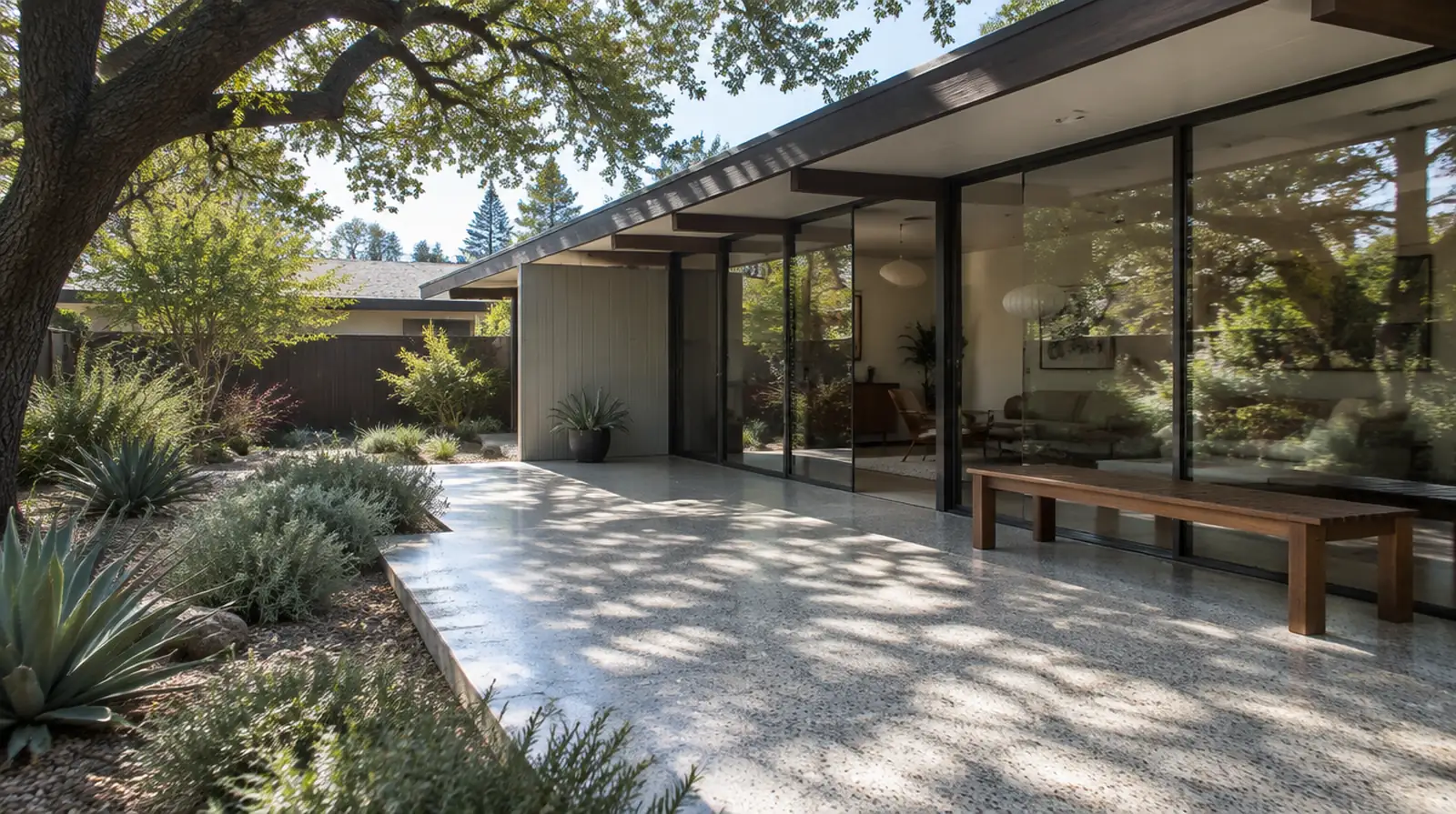
Patios across Palo Alto's neighborhoods
The patio is different depending on where you live in town. In Greenmeadow, Charleston Meadows and the other Eichler tracts, the slab often runs right up to glass walls and an atrium, so the outdoor floor is part of the view from inside. Older homes in Professorville, Crescent Park and Old Palo Alto tend to have smaller rear patios poured decades apart, with a newer section next to an original one. In Barron Park and Midtown there are ranch homes with long side yards and covered patios added on later. A coating ties all of those pieces together into one surface.
What a patio coating does
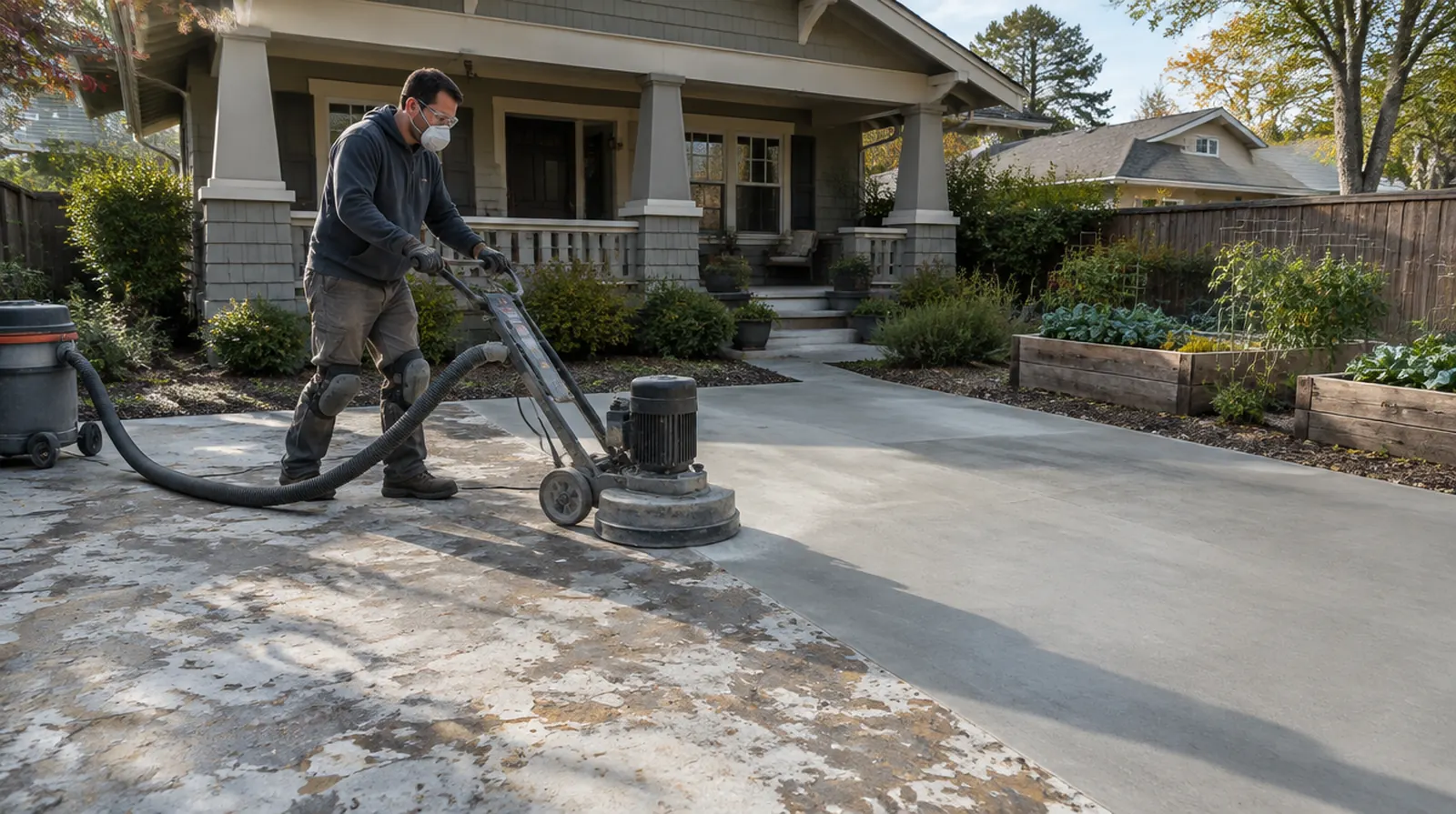
We grind the slab to open the surface, repair cracks and chips, then apply a base coat, broadcast decorative flake or quartz and seal it with a UV-stable polyaspartic topcoat. Unlike garage epoxy, which can yellow and chalk in sun, polyaspartic stays clear outdoors. The result is a sealed, textured floor that hides small imperfections in the concrete and wipes clean.
- Fine texture added to the topcoat so the surface grips when wet.
- Muted colors such as gray, sand and warm stone that suit mid-century and traditional homes.
- Coving or clean edges where the patio meets stucco, siding or a glass wall.
- Matching finishes for walks and steps leading to the yard.
Clay soil, oak roots and cracks
Much of Palo Alto, especially closer to the Bay, sits on expansive clay that swells in the rainy season and shrinks in the dry months. Patio slabs move with it, so most have a few cracks. We chase and fill stable cracks before coating. If a crack is still opening every year, we will tell you a coating may show it again, because no topcoat can stop the slab underneath from moving.
Big trees matter too. Coast live oaks, valley oaks and redwoods are common in local backyards, and the city protects many of them. We do not cut roots or remove trees for a patio job. If roots have lifted a section of slab, that section usually needs concrete work before a coating makes sense. Oak tannin stains and fallen acorns are much easier to clean off a sealed surface than bare concrete.
Weather and timing on the Peninsula
The mild climate is one reason patio coatings work well here. We can install most of the year, but winter rain sets the schedule from about December through March, because the slab must be dry before we start. Summer and early fall are the easiest months. Polyaspartic cures quickly, so most patios are walkable the next day and ready for furniture within a couple of days. Sprinklers aimed at the slab should be turned off for that stretch.
Working on tight lots
Many Palo Alto lots are narrow, with the patio reachable only through a side gate or the house. Our grinders and vacuums fit through a standard gate, and we keep dust contained with shrouded tools so neighbors and open windows are not covered in concrete powder. We stage materials in the driveway, protect glass doors and siding with paper and tape, and clean up at the end of each day.
Other outdoor concrete
Many homeowners coat the patio and the driveway at the same time so the finishes match. See driveway coating. Pool owners can look at pool deck coating, which uses a cooler texture designed for bare feet. For a simple clear finish without color, our concrete sealing service may be enough.
Patio coating questions
How long does a coated patio last?
On a properly ground and repaired slab, a flake and polyaspartic system lasts many years outdoors. The topcoat takes the wear and can be refreshed when the busiest paths start to dull.
Will it get hot in summer?
Light colors stay comfortable. Darker blends hold more heat in full sun.
Do you serve nearby cities?
Yes, including Menlo Park, Los Altos, Mountain View and East Palo Alto.
Price your patio coating
Call (650) 407-2065. Send a few photos and the rough size, and we will set up a time to measure and test the slab.