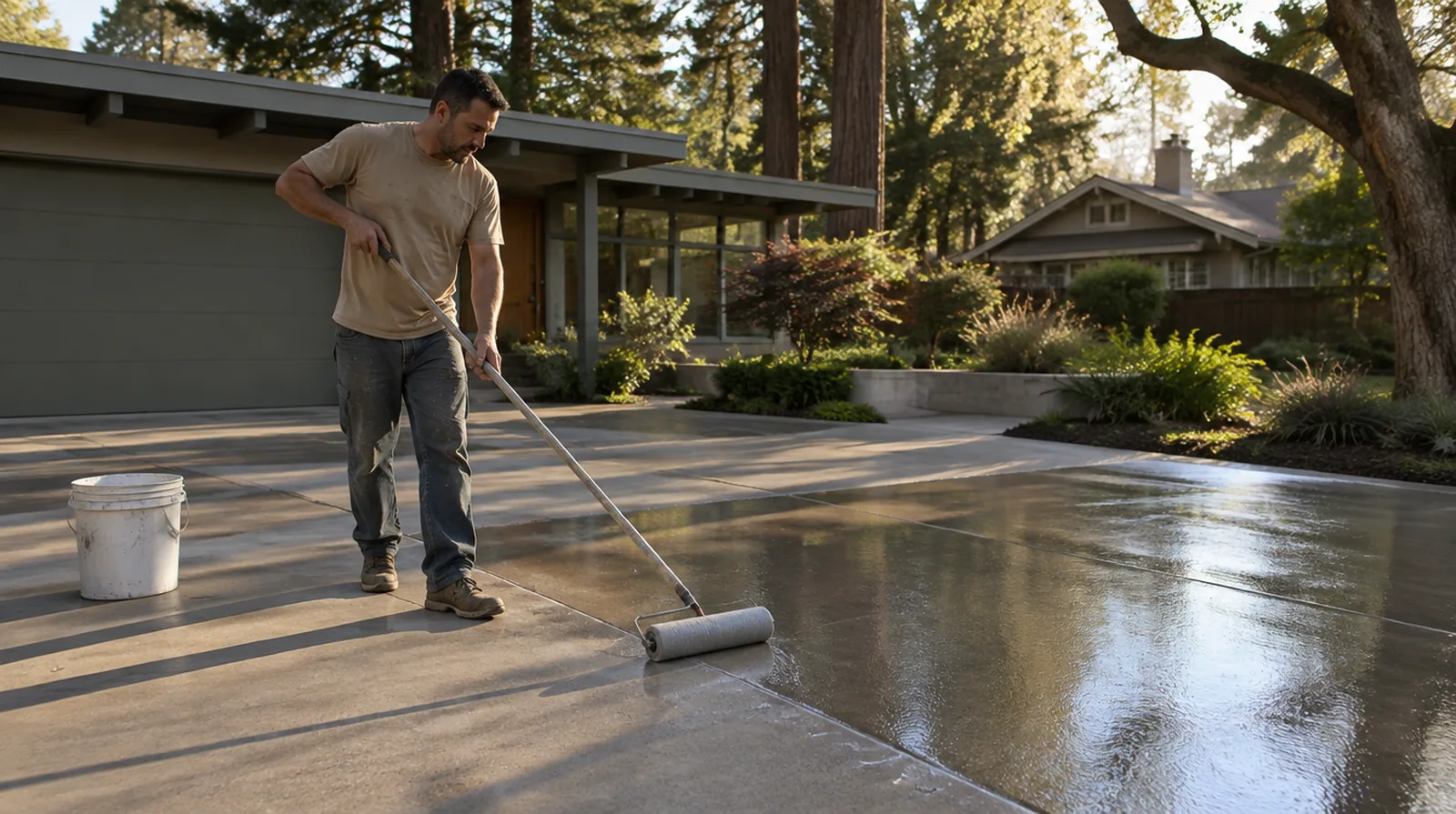
Why seal here
Palo Alto winters bring steady rain, and shaded patios under oaks and redwoods can grow moss and stain from leaves. A breathable penetrating sealer reduces water absorption while letting vapor escape, so the slab does not trap moisture.
Options
- Penetrating sealers: natural look, no change in grip.
- Topical sealers: a sheen that enhances color, useful on exposed aggregate or colored concrete.
Our process
We clean, treat organic stains, let the concrete dry and apply sealer in even coats.
Where we seal
- Patios and pool decks
- Driveways
- Walkways and entry steps
- Exposed aggregate around mid-century homes
Will it stop moss?
It slows it, but shaded areas still need cleaning.
How often do I reseal?
Every few years.
Exposed aggregate and mid-century hardscape
Many older Palo Alto homes have exposed aggregate walks and patios, the pebbly finish that was popular in the 1950s and 1960s. Over time the stones lose their color and the cement between them darkens with mildew. After a careful cleaning, a sealer can deepen the stone color again and make the surface easier to rinse. We test a small section first so you can see the look before we do the whole area.
Driveways under redwood and oak litter
Tannins from fallen leaves stain driveways dark brown each autumn. Sealing after a deep clean makes those stains much easier to remove the next time.
Sealing questions from Palo Alto homeowners
Will sealer darken my exposed aggregate? Many do slightly, which brings out the stone colors. We test a small area so you can approve the look.
Is sealer safe near my vegetable garden? We protect beds during application, and cured sealer is inert.
Can you seal a permeable or pervious slab? We generally do not, since sealer can block its drainage.
Do you work on heritage properties? Yes, with gentle cleaning and breathable sealers that will not trap moisture in older concrete.
Winter rain, shade from mature trees and fallen leaves keep many Palo Alto walkways damp for months. Concrete sealing in Palo Alto helps those surfaces shed water, resist staining and stay cleaner through the wet season. We schedule in late spring through early fall, when slabs can dry fully before sealing.
Creekside lots
Homes near San Francisquito Creek can stay damp longer. Breathable sealers suit them best.
Sealing an exposed aggregate pool deck
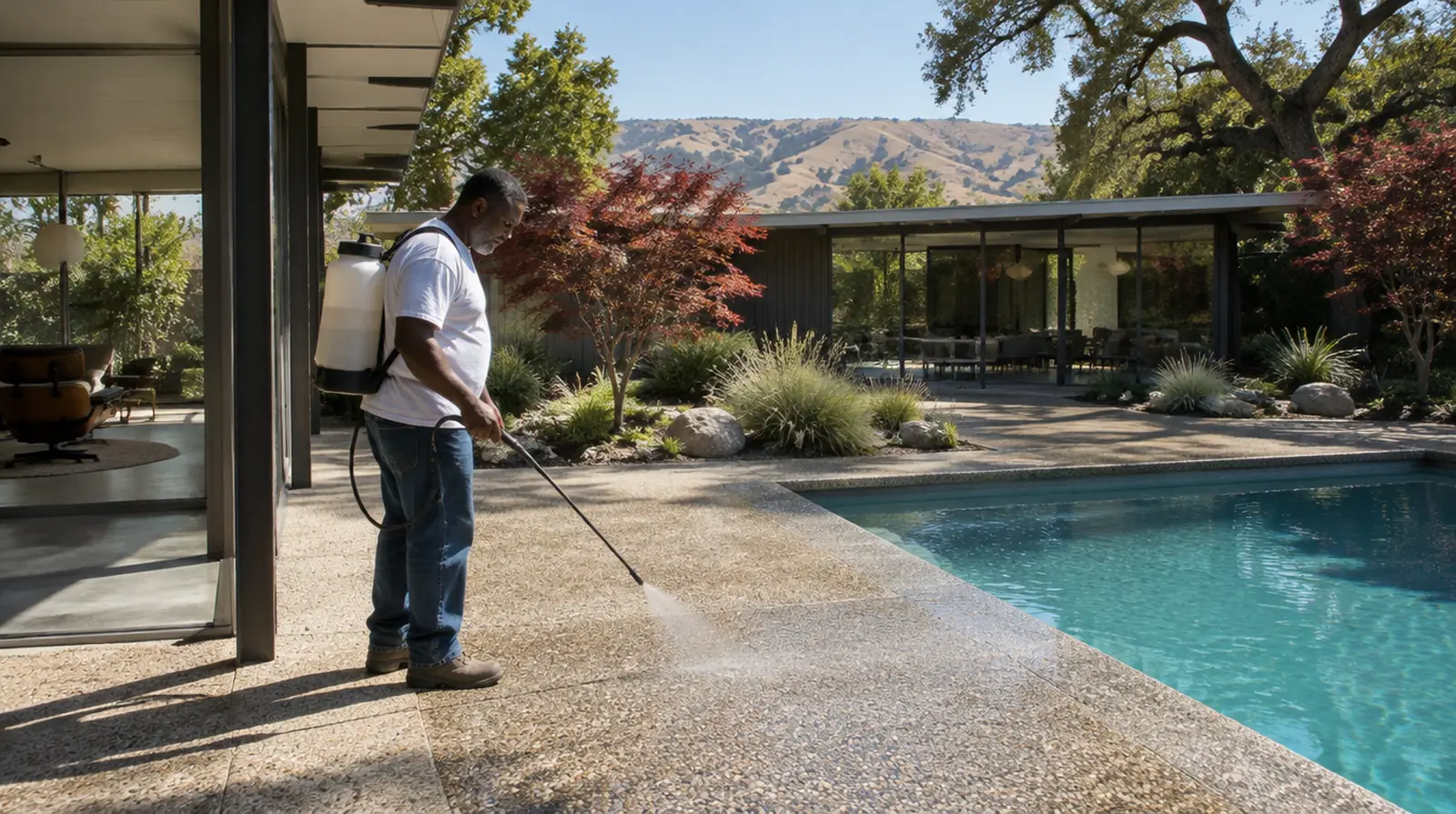
Exposed aggregate patios and pool decks are common around mid-century homes in Palo Alto. Over time, sun and pool water wear down the surface and loosen small stones. A clear sealer locks in the aggregate, reduces staining and makes the deck easier to clean. The photo shows sealer being sprayed on a patio beside a pool with drought-tolerant plants.
Prep before sealing
We power wash the surface, remove algae and efflorescence and let it dry fully. Old sealer that has turned cloudy or peeled is stripped first. Then we apply a sealer suited to the surface, whether it is plain broom finish, exposed aggregate or colored concrete.
Sealers in a mild, dry climate
Long dry seasons and strong summer sun can break down film-forming sealers faster than you might expect. Penetrating sealers last longer on driveways and walks, while film-forming sealers enhance color on patios and pool decks. We choose low-VOC products where possible and avoid sealing right before rain.
Driveways, walks and entry steps
Driveways under street trees collect leaf stains, sap and drips from cars, while front walks see constant foot traffic and sprinkler overspray. A penetrating sealer helps the concrete resist those stains without changing its look or making it slick. On entry steps and stoops, we add a fine grit to any glossy sealer so they stay safe when wet. We also keep sealer off nearby plants, wood siding and decorative gravel.
Brick and stone borders next to concrete get protected with tape and plastic so the sealer does not stain them.
Sealing questions
Will sealer make the pool deck slippery? We can add a slip-resistant additive to keep wet areas safer.
How often should I reseal? Every few years for most patios, depending on sun and use.
Seal your outdoor concrete
Call (650) 407-2065.