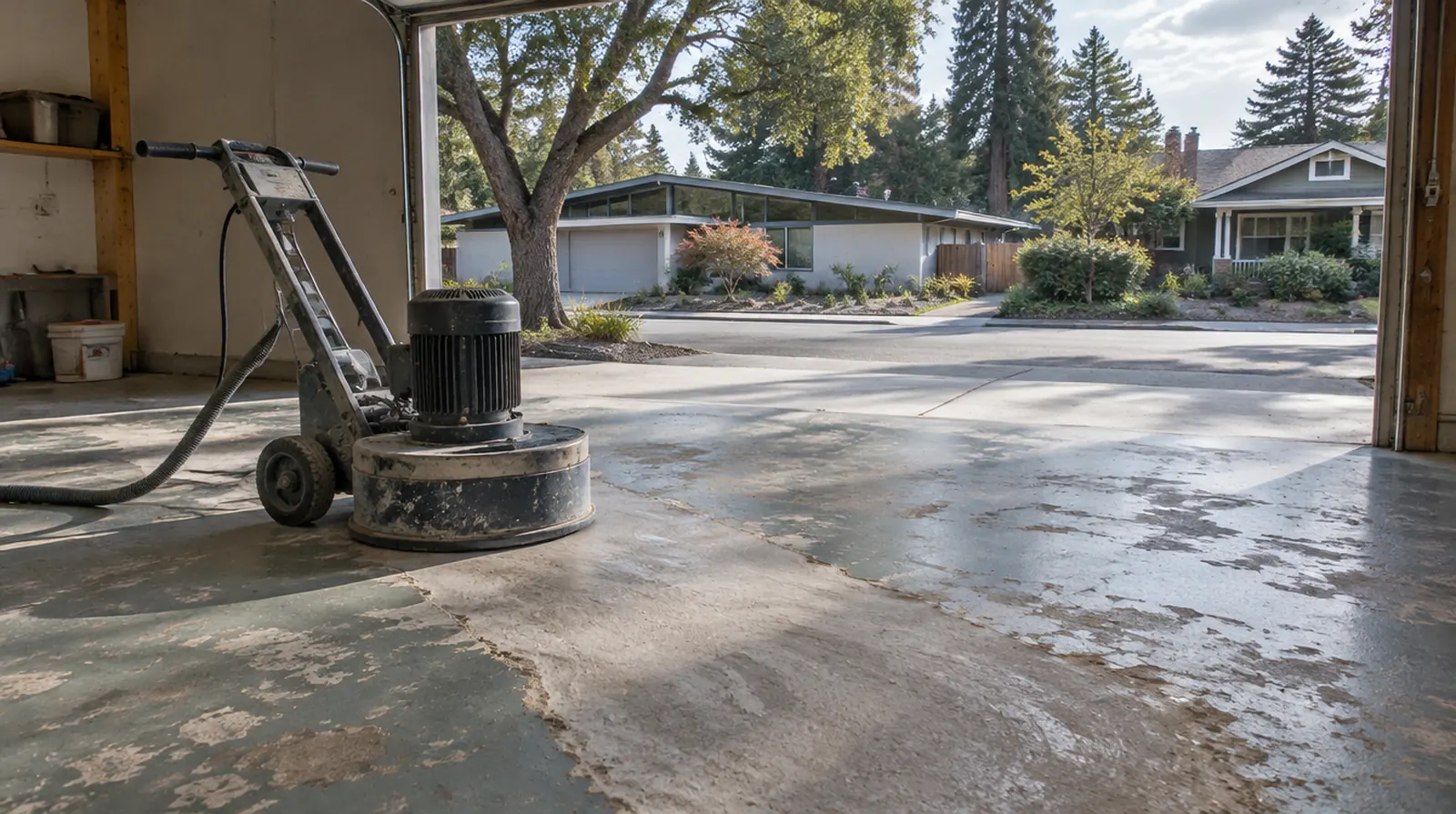
Common causes
- Moisture from below: common near the baylands, where groundwater sits high.
- Poor prep: coatings rolled over etched or unground concrete.
- Wrong product: thin paints or one-coat kits in high-traffic areas.
- Damage: dropped tools or dragged equipment.
How we repair
We test moisture, check how much coating is still bonded and look for patterns. Then we remove failed material, grind and repair the concrete, and apply a system that addresses the cause, such as a vapor-reducing primer.
Partial vs. full repair
Small areas can sometimes be patched. Larger failures need a full recoat. We explain the options honestly.
Finishing touches
A flake broadcast is a good choice to hide repair areas.
Why is my coating bubbling?
Usually moisture or trapped air from poor prep.
Can it be fixed without removing everything?
Sometimes. We test before recommending.
Hairline cracks that come back
Bay Area soils move with wet and dry seasons, and some cracks open and close slightly over the year. A rigid filler in a moving crack can telegraph through the coating again. For those, we use a flexible joint filler and explain where a line may reappear.
Repairing floors in older Palo Alto homes
Many Palo Alto garages were coated years ago with thin products that are now peeling under tires or blistering where moisture comes up through the slab. Epoxy floor repair in Palo Alto often also involves Eichler slabs with radiant heat, where we must be careful not to grind too deep, and older garages in Professorville and Crescent Park with uneven, patched concrete.
Our approach
We test bond and moisture, map damage and decide with you whether a patch or full redo is the better investment. On radiant slabs we use shallow grinding and keep heat off during the install.
Repair questions
Can a repair match my existing color? Close on flake; solid colors may differ slightly.
How long is the garage out of use? Usually one to two days.
Can you work around an EV charger? Yes, we mask and protect it.
Repairs in ADUs and studios
Converted garages and ADUs sometimes have coatings that look tired after a few years of use. A light grind and a fresh clear coat can make them look new.
Filling hairline cracks before a recoat
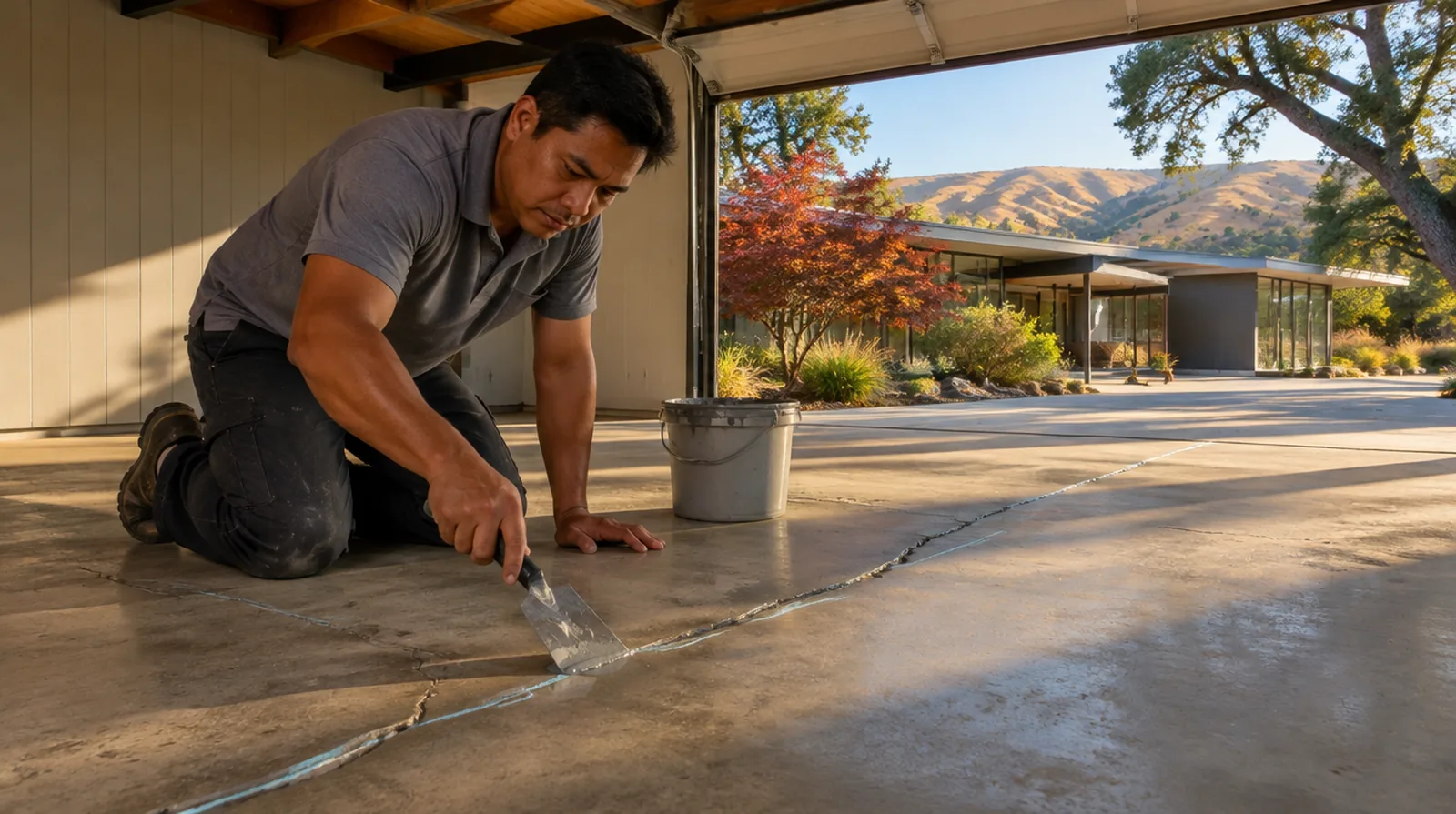
Fine cracks are common in Bay Area slabs. Soil movement, settling and small earthquakes all leave hairline lines across garage floors and patios. Before a recoat, we grind the surface, mark the cracks and fill them with epoxy filler. The photo shows that step, with crack lines marked in chalk and filler being worked into the concrete with a putty knife. Once it cures, we grind it flush so the new coating has a smooth base.
Why older coatings let go
We often see floors that were painted with a thin garage paint or a kit epoxy without grinding. Those coatings lift under tires, peel near the door and show white blooms where moisture comes up through the slab. We test moisture, check adhesion and explain whether a repair or a full recoat makes more sense.
Repairs in older detached garages
Older garages in neighborhoods like Professorville and Crescent Park can have uneven slabs, past patches and spalled edges. We fill low spots, repair broken edges and prepare the surface so a new coating bonds well. Sometimes the right answer is a breathable sealer instead of a full coating, especially on very old concrete that holds moisture.
Moisture blooms and white haze
A cloudy or white film under an older coating, especially near the baylands and creek-side lots, often points to moisture moving up through the slab. Simply recoating will not stop it. We remove the affected coating, test the concrete and use a moisture-tolerant primer before rebuilding the floor so the problem does not return.
Repair questions
Will repaired cracks show? Filled cracks are hidden under flake but may show faintly under solid color.
Can you fix one damaged area? Yes, if the rest of the coating is sound.
Get a diagnosis
Call (650) 407-2065 to schedule a repair visit.