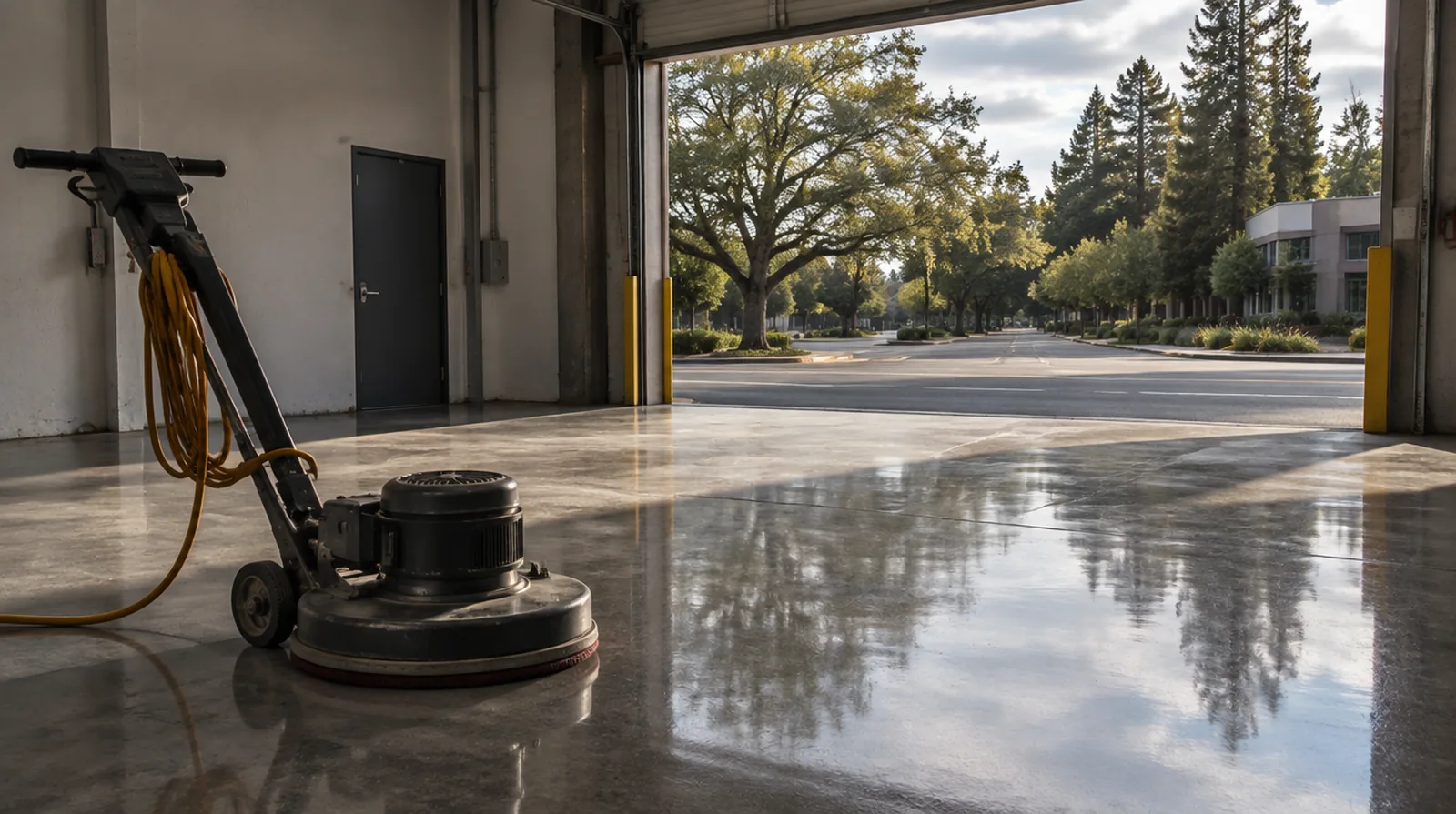
Why it pairs with Eichlers
Eichler homes were designed around open plans, glass walls and concrete slabs. Many original owners covered the slab with tile or carpet. Polishing brings the concrete back as the finished floor, in keeping with the mid-century design. Because radiant tubes sit in the slab, we keep the grinding shallow and avoid any cutting.
The process
We remove old flooring and adhesive, grind with progressively finer diamonds, apply a densifier to harden the surface and polish to your chosen sheen. A guard finish helps resist stains.
What to expect
Polished concrete shows the slab's natural character, including old patches and tack strip holes. Some clients love that; others choose a metallic finish for a uniform look.
Upkeep
Dust mop and use a pH-neutral cleaner. Periodic burnishing keeps the shine.
Is it cold underfoot?
Over radiant heat, it is comfortable year-round.
Can you polish just one room?
Yes, though transitions take planning.
Removing old flooring
Carpet tack strip, tile thinset and old mastic all come off during the first grinding passes. Some older adhesives need special handling, so we test before removal and plan the right approach.
Polished concrete in Palo Alto remodels
Remodels often uncover slabs that polish beautifully. Polished concrete in Palo Alto suits open-plan living spaces, kitchens, studios and offices. It is durable, easy to clean and pairs well with radiant heat, since the slab warms evenly. We grind shallow on radiant slabs and keep heat off during work. Polishing reveals the slab's history, including patches and old tack strip holes, which some people love and others prefer to cover with rugs. We can polish a test patch first.
How we polish
We grind with coarse diamonds to flatten and open the slab, fill cracks, apply a densifier and refine through finer pads to the sheen you choose. A guard sealer helps resist stains. Vacuums capture dust throughout, so occupied homes stay clean. Matte suits relaxed spaces, satin is our most common pick for homes, and high gloss makes a statement in entries and studios. Daily care is just a dust mop and a neutral cleaner.
Dye and aggregate choices
Dyes warm up plain gray; a deeper grind reveals more stone for a terrazzo feel.
Polished concrete in a downtown café
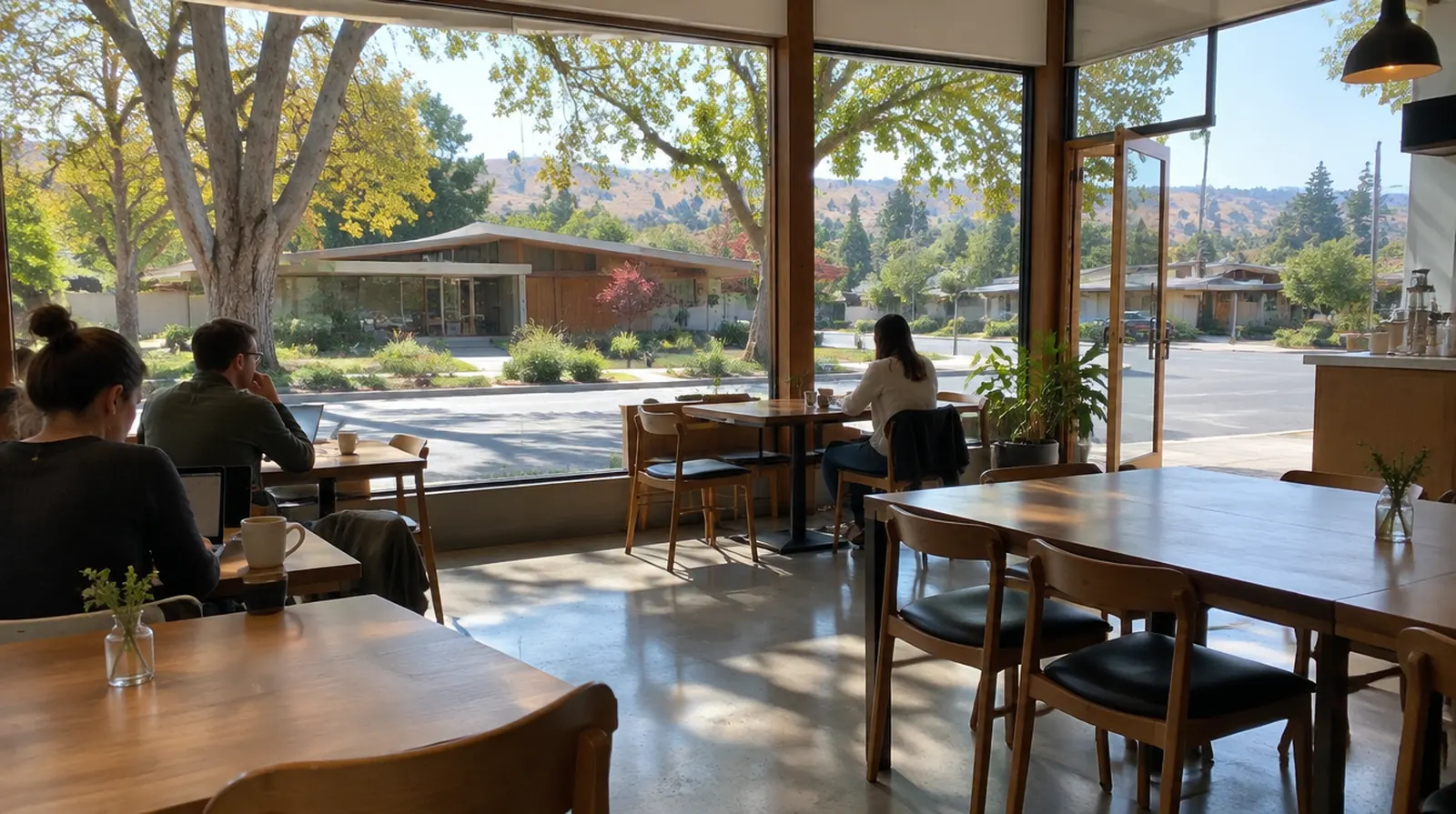
Restaurants and cafés along University Avenue and California Avenue see a steady stream of customers, dropped drinks and chairs scraping the floor. Polished concrete fits those spaces well. It is durable, easy to mop and has a natural look that goes with wood tables and big windows. The photo shows a café with a soft-sheen polished floor and sycamore trees outside.
Uncovering an older slab
When an older storefront is remodeled, we often find concrete under layers of tile, vinyl or carpet. We remove adhesive, fill holes and grind the floor level. Some floors reveal old patches and saw cuts that add character, while others need more repair before polishing. We will tell you what to expect once we see the bare concrete.
Choosing sheen and aggregate
A light grind keeps the surface creamy with little stone showing. A deeper grind exposes more aggregate for a speckled look. Sheen ranges from satin to high gloss. Restaurants usually prefer a satin finish because it hides footprints and wear, while showrooms may choose a brighter shine.
Polished concrete at home
Homeowners in Eichlers and newer modern builds often ask about polished concrete for living rooms, kitchens and hallways. It suits radiant heat, because the warmth passes straight through the slab without carpet or tile in the way. Area rugs soften the sound and add warmth where you sit. Before we commit, we check how deep the tubing runs so grinding stays well above it.
Polished floors also make sense in ADUs and studio rentals, where owners want a durable surface that is easy to clean between occupants.
Polishing questions
Can a polished floor stay slip-resistant? Yes, with the right finish and regular cleaning.
Will coffee stains soak in? The guard coat helps, but spills should be wiped up quickly.
See if your slab can be polished
Call (650) 407-2065.