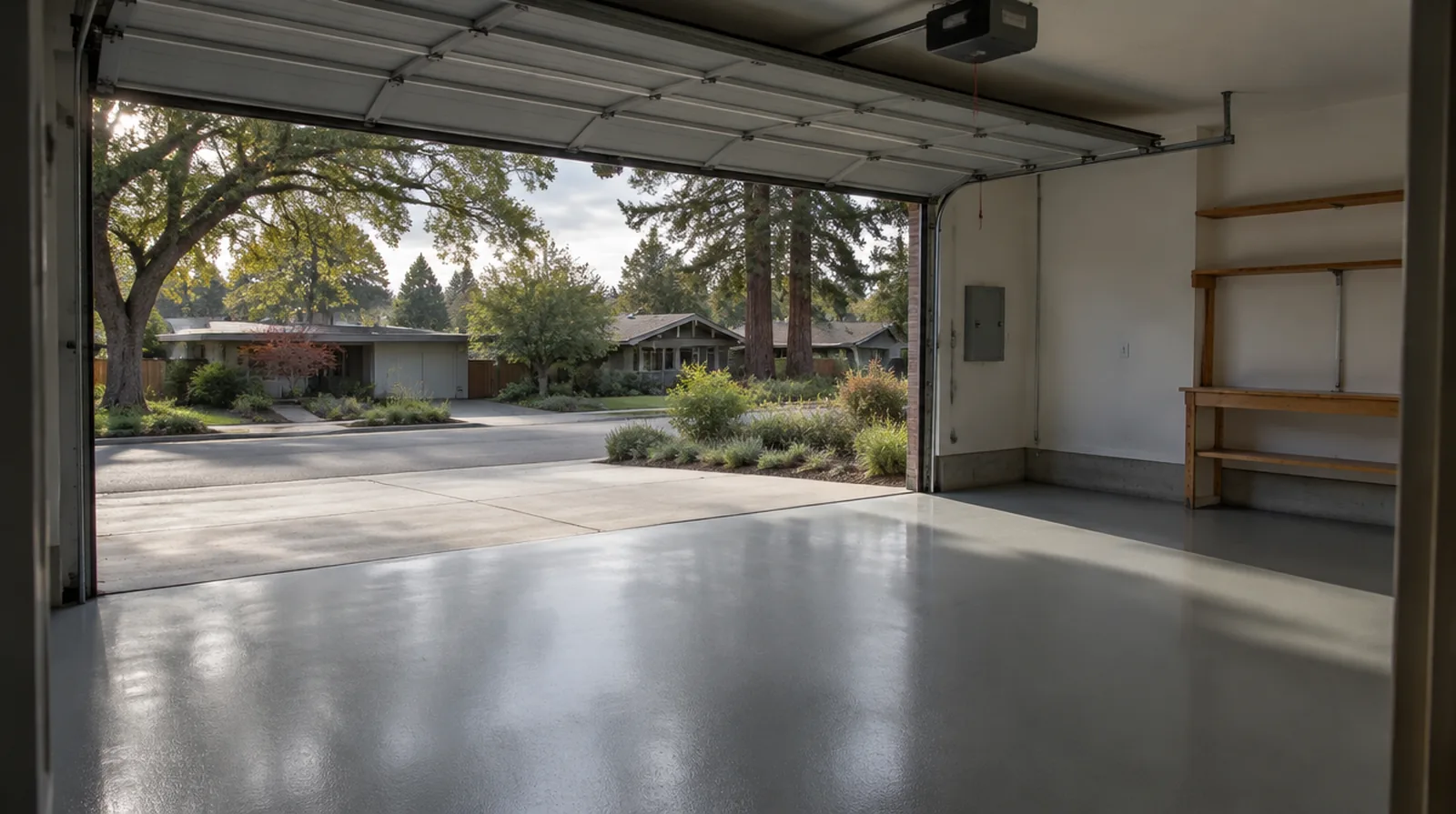
How we build a garage floor
1. Moisture test: we measure vapor coming up through the slab.
2. Grind: diamond tools open the concrete and remove sealers, paint and stains.
3. Repair: cracks, pits and spalls get filled and ground flat.
4. Prime: a penetrating primer, chosen to match the moisture reading.
5. Build: a colored base coat, optionally with chips.
6. Top: a clear wear coat for abrasion and chemical resistance.
Garages as work spaces
Plenty of Palo Alto garages hold a workbench, a 3D printer, e-bikes and charging equipment. A coated floor sheds dust, makes small parts easy to find when they drop, and wipes clean after a messy project. Lighter colors brighten the space for close work.
EV charging and battery storage
If you charge an electric car in the garage, the floor takes regular heat from tires and occasional drips. A ground and primed epoxy floor handles that well. We coat around the charging pedestal or conduit carefully.
Dust control
Grinding produces silica dust. Our equipment connects to HEPA extraction so very little escapes. OSHA's silica page describes the health risks we take seriously.
Will it work on a damp slab?
With the right primer, often yes. Very high readings may need a vapor barrier coat.
How long is the garage out of use?
About two days for install and several days before parking.
Questions about garage floors in Palo Alto
Can you coat a garage with radiant heat? Yes, with shallow prep and the heat turned off during install and cure.
Do you need the garage completely empty? Yes, including anything on low shelves.
Will the coating handle EV battery packs or heavy tools? Yes, with the right thickness.
Many garages here double as workshops, gyms and storage for bikes and outdoor gear. We build the floor around that use, with grip near the door and a durable clear top where tools and carts roll.
How we build the floor
We test moisture, grind just enough to open the surface, fill cracks and joints, prime, add color or flake and finish with a UV-stable clear top. Vacuum-equipped grinders keep dust out of the house. Foot traffic is fine the next morning; parking follows a few days later. We give you written times before we leave. Beach-city installers run into damp slabs even more often, and this breakdown of what a garage coating system includes shows where a moisture-tolerant primer fits into the same layers.
Garages built around an electric car
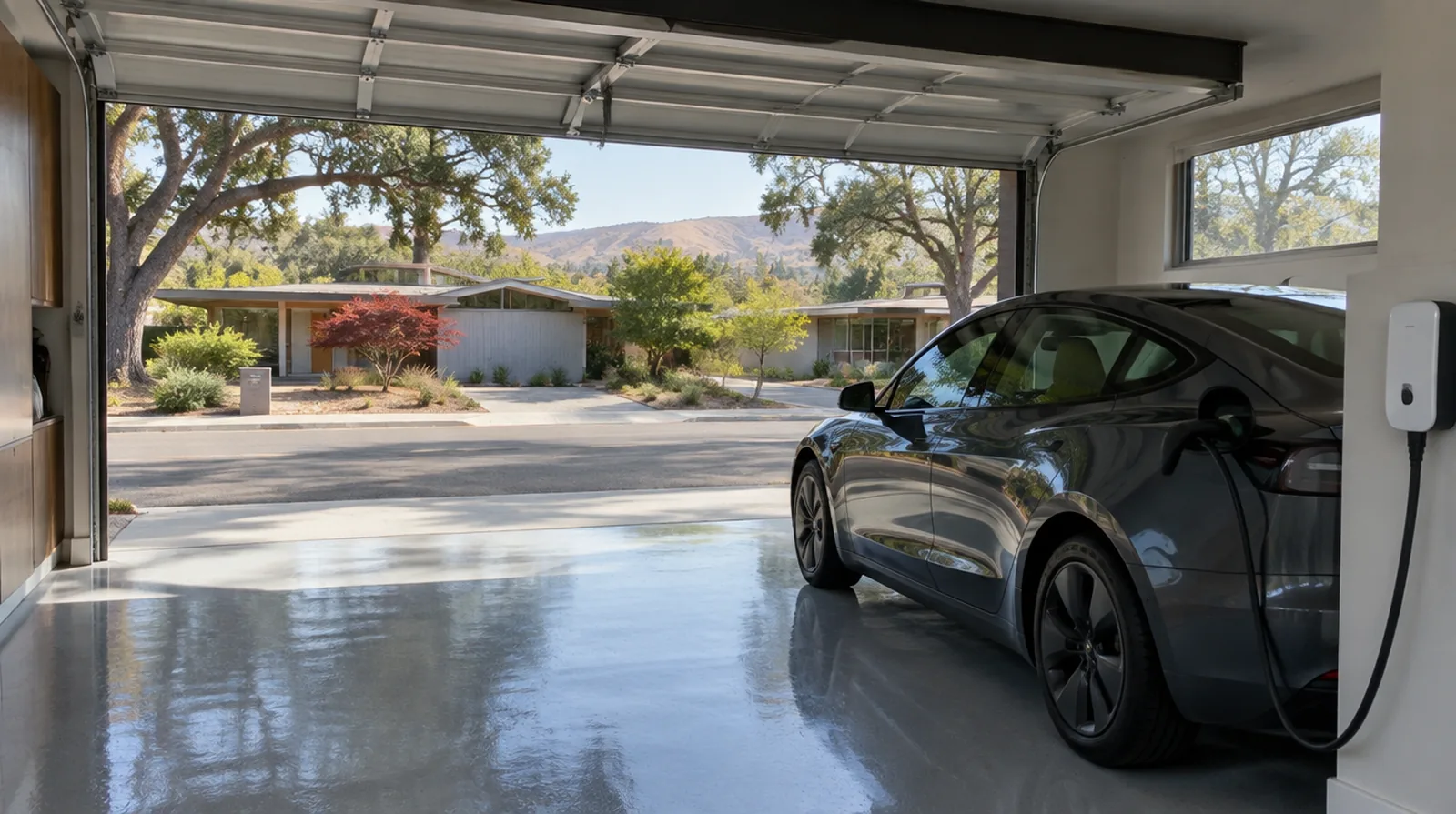
A large share of Palo Alto garages now hold an electric vehicle and a wall charger. EVs are heavy, and their tires are often wide and soft, which can mark a weak coating over time. We use a full-strength system ground into the concrete and a top coat that resists tire marks. The photo shows a fresh gray floor with the charger cable hanging nearby and an Eichler street outside. We coat right up to the charger mount and conduit, then seal the edges so nothing gets under the coating.
Gentle prep on slabs with radiant heat
Some attached garages in mid-century homes share a slab with the house, and radiant heating tubes may run close to the garage. We locate likely tube areas, keep grinding shallow and skip anything that requires cutting or drilling into the slab. Cracks are filled with material that will not trap heat or stress the slab.
Planning storage and workbenches
Cabinets, wall racks and workbenches are easier to install after the floor is coated, so the finish runs all the way to the wall. If you plan to add storage, we suggest coating first and installing later. That way, you can change the layout in the future without leaving a patch of bare concrete behind.
Garage floor questions
Will a hot EV tire peel the coating? Not on a ground, properly primed slab with a good top coat.
Can you match the gray of my house? We can pick a solid color or flake blend close to your trim or siding color.
Upgrade your garage floor
Call (650) 407-2065 to schedule a moisture test and estimate.